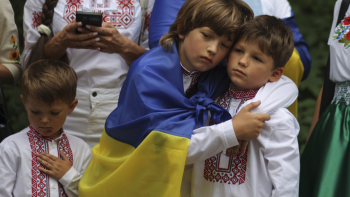


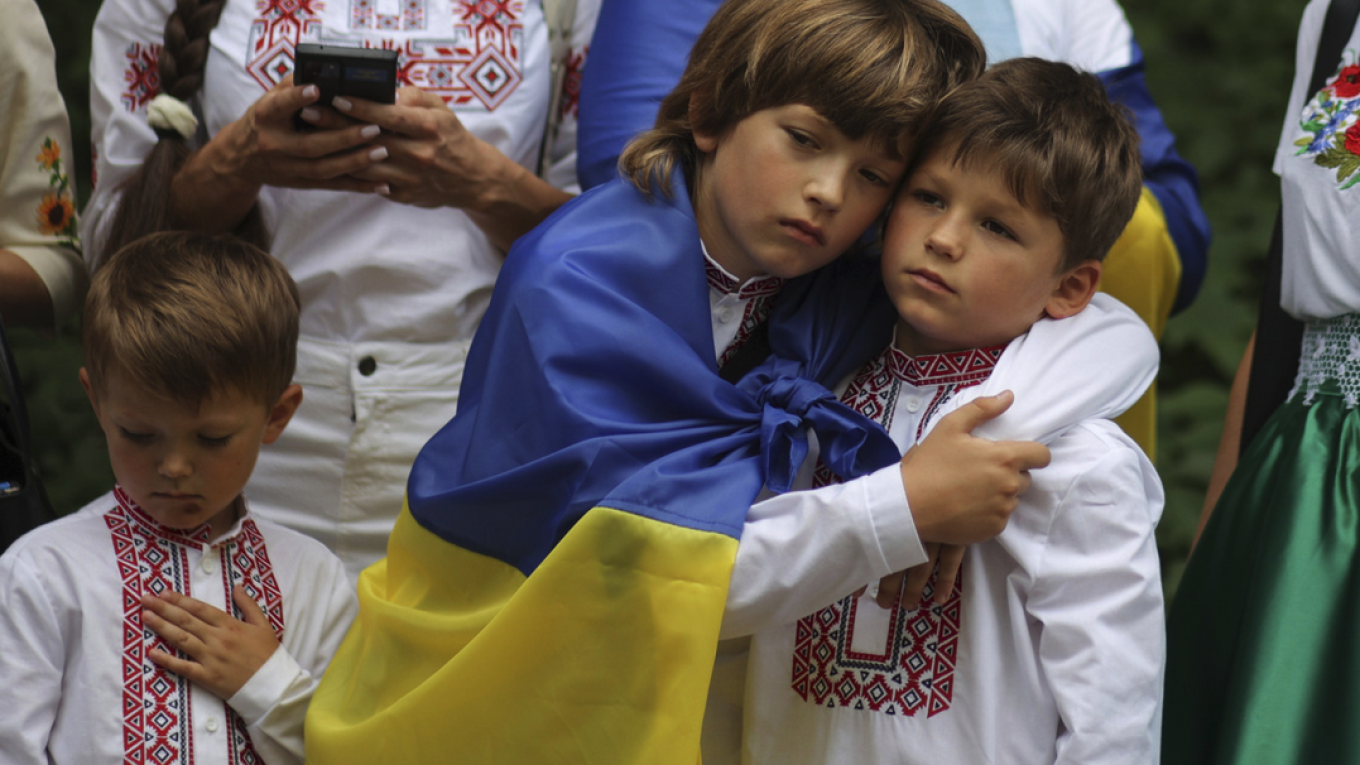
Starting in 2014 and intensifying since 2022, Moscow has implemented an outrageous policy of large-scale Russian state-enforced displacement and deportation of Ukrainian civilians including thousands of unaccompanied minors and teenagers.
One of the Russian invasion’s aims since 2022 has been to capture and then russify large numbers of Ukrainian citizens in order to prop up Russia’s declining population. This aim may be as important to Moscow as the annexation of Ukrainian territory. Child displacement and deportation has taken place in Ukraine’s occupied Crimea and Donbas since 2014. Yet, it did not become widely known until 2022 when the numbers of such illegal transfers rose sharply.
Since Feb. 24, 2022, Russia has displaced or deported at least 19,546 unaccompanied Ukrainian children according to official figures provided by the Ukrainian government’s Children of War portal. However, this statistic includes only those children on whom information has been provided. Presumably, the real figure is considerably higher.
They include "children of war" in a broader and more literal sense, i.e. minors who have been left alone during the fighting. Unaccompanied children have been collected by Russian officials and activists from the frontline or occupied Ukrainian territories. Some children’s parents or relatives have been persuaded by Russian agents (officials, activists, collaborators, etc.) to send their offspring to Russian summer camps or other recreational centers. Some of these camps in Russia are advertised as integration programs for Ukrainian children. After an agreed recreation period, many have been kept for longer and even transported elsewhere.
As many as 3,855 underage orphans and other minors living in Ukrainian children’s homes had, according to the Regional Center for Human Rights (RCHR), been deported or displaced by September 2023. Some Ukrainian children have been separated from their parents in so-called filtration camps along the frontline.
Most of these illegally transferred unaccompanied Ukrainian children have close relatives or other legal guardians. Some of the latter live in the government-controlled areas of Ukraine whereas others are themselves externally displaced and live abroad. In the vast majority of cases, neither the relatives nor any Ukrainian governmental authorities have given explicit permission for Russia to permanently transfer these unaccompanied children.
Russia adopted new legislation in 2022-2023 to facilitate the Russification and assimilation of Ukrainian children. These revisions have led to a situation in which, according to a report from the Organization for Security and Co-operation in Europe, children and the legal guardians from whom they have been separated “have virtually no say in the whole process [of citizenship change].”
Receiving Russian citizenship entitles adopted children to social guarantees and access to governmental subsidies. This creates financial incentives for potential adopters. Under the Russian Family Code, adopted children are equal in status to their parents’ own children, even allowing their name, surname, birth date, and birthplace to be changed. This makes it difficult to establish Russia-adopted Ukrainian children’s status and their relatives in Ukraine.