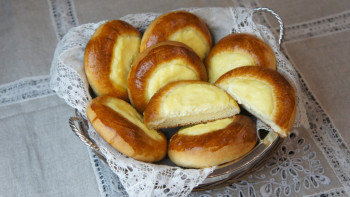


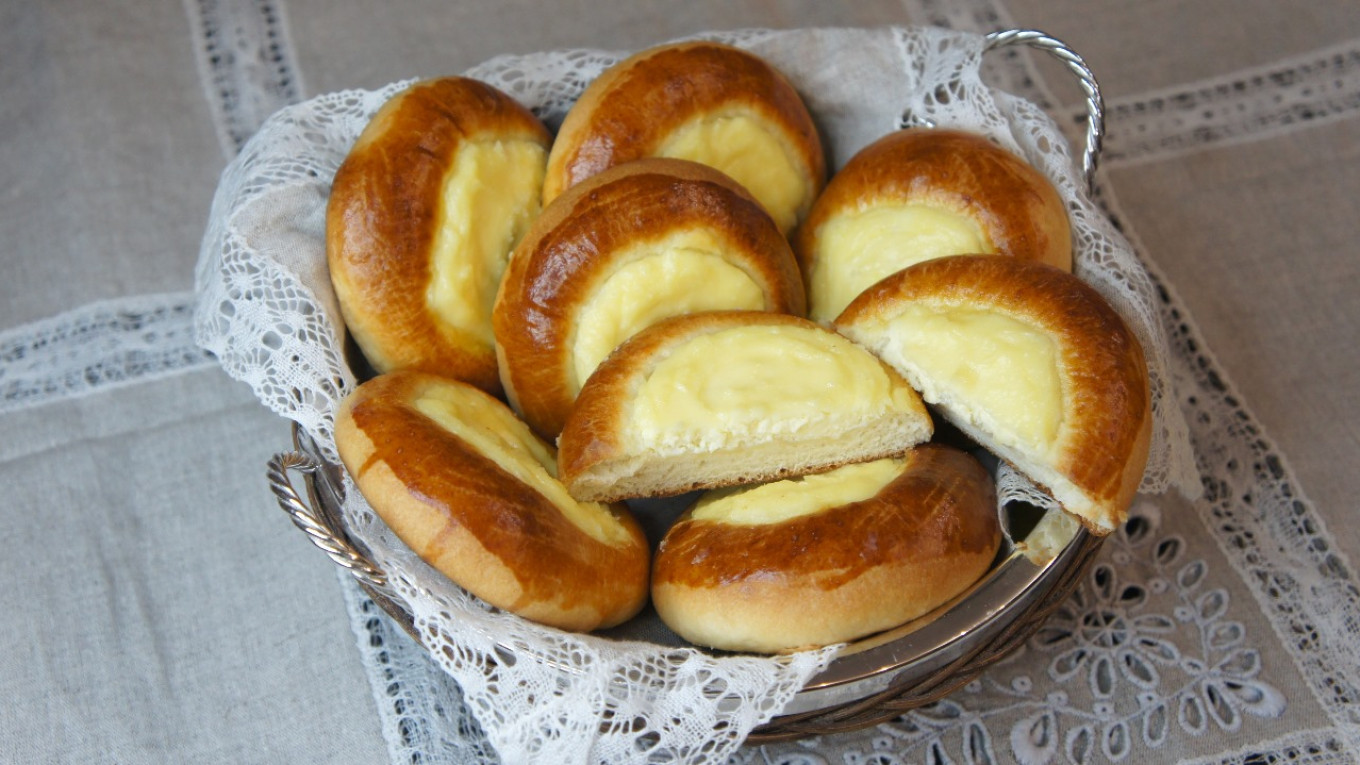
Vatrushki are one of the most popular and delicious little treats made of dough. They are made with different fillings — jam, fruit puree, or jelly — but the most popular are filled with sweet pot cheese. Everyone knows vatrushki. But the history of Russian cuisine is tricky, and it constantly breaks all our stereotypes about the glorious culinary past.
The story of vatrushki is a bit like the old joke about a little girl who comes home from kindergarten and says a slightly naughty word. Her mother tells her there is no such word. She is astonished. “But how can that be? Everyone has a fanny. How can there be no word for it?”
The story, as you will see, fits Russian vatrushka. In fact, vatrushka is a good illustration of our stereotypes about Russian cuisine. It would seem to be a traditional, ancient Russian dish. What could be simpler? It’s round in shape to save dough — 500 years ago in a peasant hut who would cut off the excess dough with a knife to make an even rectangular pie? And who would bake it on a metal sheet pan that didn’t exist? All you had to do was roll a bit of dough into a ball, press it down in the middle, put in a filling of pot cheese, mushrooms or millet porridge. That's it. Your vatrushki are ready.
Everything would be fine if we could find the word "vatrushka" in ancient sources like Domostroi, for example. But no! Nothing even resembling the term "vatrushka" can be found there, although there are plenty of pies and pastries made with pot cheese.
"On the feast day of the Intercession there is a large pie baked in the stove with blini and pot cheese, big fritters served with honey, a big pie made of blinis, savory pies made with pot cheese, pies and round cottage loaves served in between soups and stews… On Easter the fast is broken with fried pies filled with eggs and pot cheese, and cheese fritters with eggs and pot cheese.”
So you can’t say that dishes like vatrushki were not made in Russia. Almost every province had its version. In Arkhangelsk they made shanezhki with fillings. In Kostroma they made kuleika, in Voronezh — mandryka. There were also little filled dough pies called kokorka, kokurka, kruzhalka and dozens of other variants. And there were shangi made with pot cheese and potatoes that were very similar to vatrushki.